
Fatal Claw Guide — Systems, Abilities & Progression
The Fatal Claw guide hub for 1.0: combat, healing, Engraved Skills, Cabitz builds, the Carox, saves, and direct answers to the systems questions players ask.
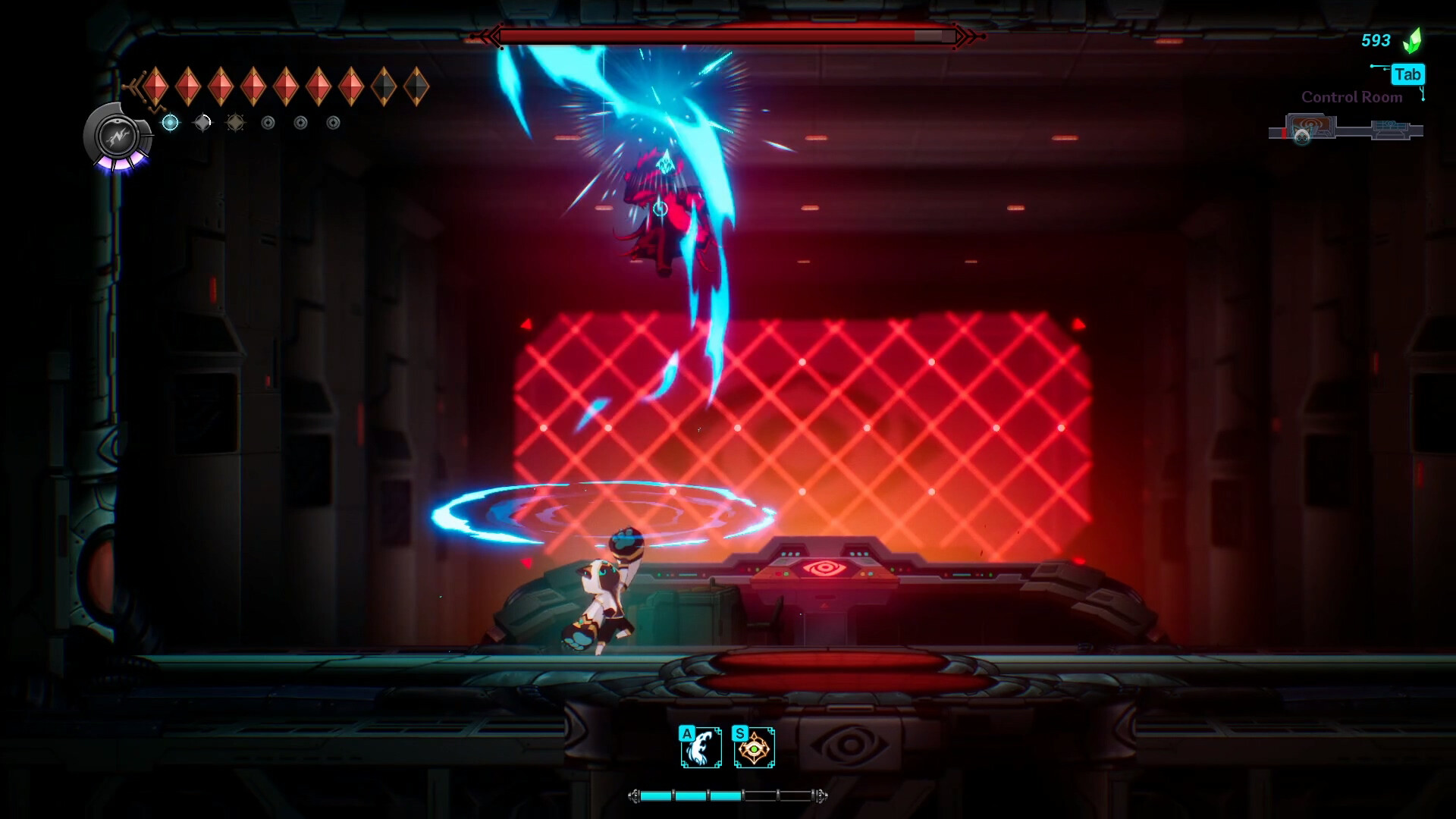
This Fatal Claw guide is the systems layer of the wiki: how Kisha fights, heals, absorbs, and customizes through the 1.0 build released on August 26, 2026. Fatal Claw is a single-player 2D Metroidvania by NDEV GAMES, published by Com2us Holdings, and nearly every wall a player hits is a systems problem rather than a reflex problem. Learn the five systems below and the route opens up; skip one and you will meet it again as a locked door.
Quick answer
New players should internalize five things before anything else: attacks charge your magic, healing is a combat resource rather than a free button, Cabitz stones are build-defining and never junk, the Carox map is free from the first minute and wants you to mark dead ends, and difficulty sliders exist and are not a punishment. Every one of these comes from the game's own store description or its developer commentary, and together they cover the first ten hours.
Combat: claw strings, mana, and the pogo
Kisha fights with rush, jump, and claw strikes — a three-hit combo that extends to five as you invest in the moveset. The critical rule underneath the fighting is that attacking refills your magic: mana is earned by landing hits, so aggressive play funds the very skills that keep you alive at range. Community guides converge on the same loop — rush in, bank mana with the claw, spend it on Engraved Skills at the moment an enemy telegraphs.
The downward attack deserves special mention. Striking downward pogo-style bounces Kisha upward for extra air time, and the 1.0.8 hotfix slowed the pogo descent to make the rhythm easier to read. If bouncing off enemies feels punishing in your first hours, that patch is why it will feel better than the launch clips you may have watched.
Healing: a resource, not a rescue
Healing in Fatal Claw is woven into the combat economy rather than handed out at every bench. Healing consumes charges you must rebuild, max health grows through collectible brooch fragments, and magic statues scattered through regions restore your casting reserve. After named bosses, owl statues appear to restore health — a quality-of-life addition that arrived during the Early Access expansion window and is now standard.
Because healing is finite, the guide-level advice is simple: treat every hit taken as spending a resource you will want for the boss. The 1.0.8 hotfix also improved the healing tutorial with consecutive-use guidance, so the game itself now teaches this loop more clearly than it did at launch.
Mutated Abilities and Engraved Skills
The two growth systems carry the Metroidvania progression. Mutated Abilities are powers Kisha absorbs from the infected creatures she defeats — the dash, wall claws, glide, and their upgrades all arrive this way, each one reopening old parts of the map. Engraved Skills are magical skills absorbed through the journey that unleash at a precise moment to counter enemy abilities; they run on the mana your attacks generate.
Skills can be fused, and fusion consumes Kannic, the game's solid currency — so do not spend Kannic like pocket change before you understand the fusion menu. The community maintains fusion-formula references on Steam if you want to plan builds rather than discover them, and the official 1.0.8 patch improved the guidance shown for skill fusion.
Cabitz: the build layer
Cabitz are the mysterious magic stones named in the game's own description — a customization system that adds new abilities or modifies existing ones. The developer has noted the name nods to charm-style personalization, and the practical advice from every guide source is the same: pick up every Cabitz you see. Skipping them is one of the most common early walls players report.
Cabitz choices matter at boss fights, where recommended loadouts start appearing in community guides — sustain stones for attrition fights, mana-focused stones only once you understand their recharge rules. Treat the system as your difficulty dial number two: when a new region spikes, a reworked Cabitz page often solves it before the sliders do.
The Carox, saves, and fast travel
The Carox — the game's map, a portmanteau of Cat, Radar, and Codex — is available from the first minute by design, with rooms coloring in as you explore. It auto-marks barriers and water, and its codex half remembers what you have read. The guide habit that pays for the whole run: drop a marker on every dead end and every locked ledge. The full mechanics live in the Fatal Claw map hub.
Saves bind to stone nodes and free save points, with owl statues after bosses for recovery. Stone Warp is the fast-travel verb to watch for in menu text — it becomes genuinely useful once you hold several rest points. Cloud saves are supported, and Early Access saves carried into 1.0 through the pre-release branch, so long-time players did not restart.
Difficulty, accessibility, and platforms
Fatal Claw ships with adjustable difficulty, save-anywhere support, and custom volume controls listed as official accessibility features. The community's honest split is worth knowing: some players find the early game gentle and the late bosses a spike, others call the named fights the highlight — both are true, and the sliders exist precisely because the curve is personal. Adjust without guilt; the game was designed for it.
The game runs on Steam for Windows 10 64-bit with a Steam Deck Verified badge and full controller support. If you are checking whether your machine or platform qualifies, the platform status page lists every target, and the Switch status page covers the console version announced for later in 2026.
Achievements, specs, and languages in one view
The completion layer is bigger than most players expect: Fatal Claw ships with 51 Steam achievements, and the visible official names — Frozen Boundary, Dimension Walker, Claw Sharpening, Faster Than Lightning — hint at the spread, from region exploration to combat mastery. The in-game codex grew alongside the Early Access expansions, so older achievement guides describe a shorter list than the 1.0 build tracks.
The technical floor is low enough to ignore on most machines. Minimum: Windows 10 64-bit, Core 2 Duo E5200, 4 GB RAM, GeForce 9800 GTX+ (1 GB), DirectX 10, 3 GB storage. Recommended: Core i5, 8 GB RAM, GeForce GTX 560, DirectX 11. Ten interface and subtitle languages ship at launch — English, Korean, Japanese, Simplified and Traditional Chinese, French, German, Spanish (Spain), Russian, and Portuguese-Brazil — and Steam Deck carries the Verified badge, with cloud saves covering handheld-to-desktop sync.
Stuck points this hub answers
Two search queries dominate the Fatal Claw help landscape, and both get dedicated pages rather than a paragraph here. If the Elord Castle mirrors have you stuck, the Mirror Chamber puzzle page documents the tea-and-timing solution step by step. If a ledge has you convinced the game needs a double jump, the double jump guide maps every stuck spot to the ability that actually solves it — usually the midair dash from Mirkam or the wall claws from Irbes.
A few numbers from community play are worth internalizing as you plan builds. Player reviews describe ten base Engraved Skills with two equippable at once, expanded by fusion — so your build is a sequence of deliberate choices, not a hoard. Community guides also cover controls honestly: keyboard and controller both work, rebinding is supported, and the look-up and look-down camera actions matter in vertical regions, but default binds are a starting guess — confirm them in the in-game menu rather than trusting any table, including ours.
Where to go next in this hub
The hub splits the deep answers into dedicated pages. For the two most-searched stuck points, read the Mirror Chamber puzzle and double jump versus the air abilities that actually exist. For the macro view, the walkthrough hub sequences every region, the bosses hub details the named fights and their rewards, and the characters page explains Kisha, the rival Cain, and the survivors worth rescuing.
Practical pre-purchase and planning answers live in their own pages too: how long Fatal Claw takes to beat, the 1.0 review roundup, the release date timeline, and the demo history for anyone deciding between the old trial and the full release. Every page is written against the 1.0 build and re-checked against patch notes when the game updates.